Showing posts with label 1146. Show all posts

Wednesday, May 20, 2015

Greek Commerce Ruined

Featuring an excerpt from A History of Greece from the Roman Conquest to the Present Time by George Finlay published in 1877.

Previously in Roger Ravages the Byzantine Empire. And now George Finlay

Time: 1146
Place: Constantinople

The city of Constantinople during this time.
Public domain image from Wikipedia.
The Sicilian admiral, after landing the Norman garrison at Corfu, sailed to Monembasia, then one of the principal commercial cities in the East, hoping to gain possession of it without difficulty; but the maritime population of this impregnable fortress gave him a warm reception and easily repulsed his attack. After plundering the coasts of Euboea and Attica, the Sicilian fleet returned to the West, and laid waste Acarnania and Etolia; it then entered the Gulf of Corinth, and debarked a body of troops at Crissa. This force marched through the country to Thebes, plundering every town and village on the way. Thebes offered no resistance and was plundered in the most deliberate and barbarous manner. The inhabitants were numerous and wealthy. The soil of Boeotia is extremely productive, and numerous manufactures established in the city of Thebes gave additional value to the abundant produce of agricultural industry.

Monday, May 18, 2015

Emperor Manuel's Military Policy

Featuring an excerpt from A History of Greece from the Roman Conquest to the Present Time by George Finlay published in 1877.

Previously in Roger Ravages the Byzantine Empire. And now George Finlay

Time: 1146
Place: Constantinople

The city of Constantinople during this time.
Public domain image from Wikipedia.
In other districts, where the divisions were exposed to be called into action, or were more directly under central inspection, the effective force was kept up at its full complement, but the people were compelled to submit to every kind of extortion and tyranny. The tendency of absolute power being always to weaken the power of the law, and to increase the authority of the executive agents of the sovereign, soon manifested its effects in the rapid progress of administrative corruption. The Byzantine garrisons in a few years became prototypes of the shopkeeping janizaries of the Ottoman empire, and bore no resemblance to the feudal militia of Western Europe, which Manuel had proposed as the model of his reform. This change produced a rapid decline in the military strength of the Byzantine army and accelerated the fall of the empire.

Sunday, May 17, 2015

The Byzantine Empire Circa 1100

Featuring an excerpt from A History of Greece from the Roman Conquest to the Present Time by George Finlay published in 1877.

Introduction to our series Roger Ravages the Byzantine Empire:
George Finlay (1799 – 1875) was from Scotland. His book was re-issued in 1877 with the more descriptive title A History of Greece from the Roman Conquest to the Present Time (146 BC to 1864). This blog post is the first in a series of excerpts from passage from this book. Finlay’s premise is that Roger’s invasion was a major milestone in the decline and fall of the Byzantine Empire.

And now, George Finlay


Time: 1146
Place: Constantinople
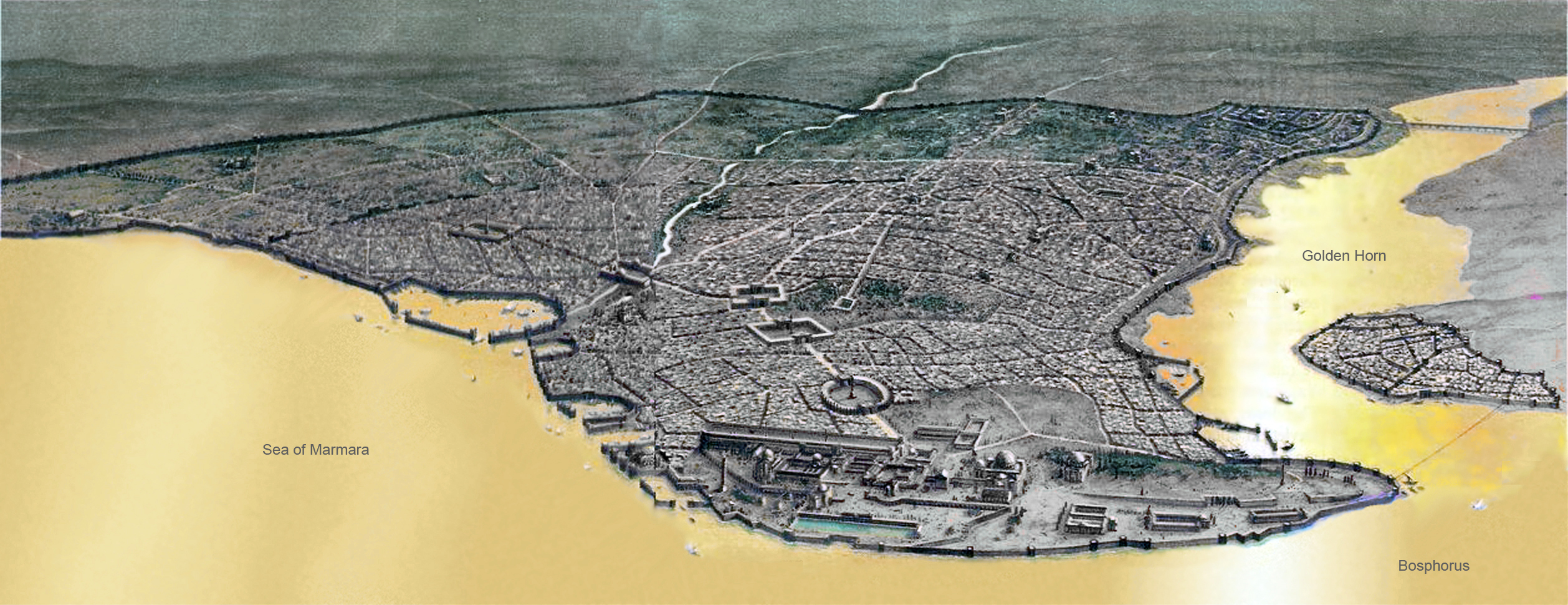
The city of Constantinople during this time.
Public domain image from Wikipedia.
The century and a half before Roger's invasion had been a period of tranquility for the distinctively Greek people of the empire, who had increased rapidly in numbers and wealth, and were in possession of an extensive commerce and many manufactures. Therefore they were perhaps the greatest sufferers from the adverse events which befell the State.)