Showing posts with label Franco-Flemish War. Show all posts

Wednesday, April 29, 2015

Flanders Wins Independence for a Price

Featuring an excerpt from History of France (5 volumes) by Eyre Evans Crowe last volume published in 1868.

Previously in War of The Flemings with Philip the Fair of France. And now Eyre Evans Crowe

Time: 1302
Place: Bruges, Flanders (modern Belgium)
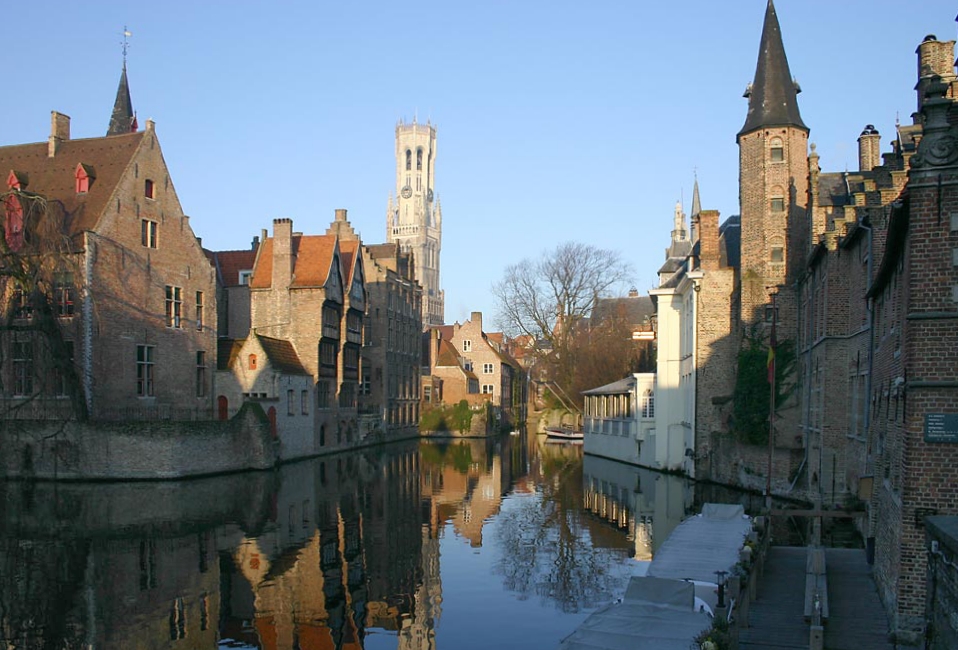
Inside Bruges
CC BY-SA 3.0 image from Wikipedia.


Philip had been long involved in a controversy with Pope Boniface VIII, and the quarrel still continued. It was not till some time after the battle of Courtrai that the King at last, delivered from the menacing hostility of Rome, had leisure to turn his mind and efforts again toward Flanders. During the year 1303 he had sought to keep the Flemings at bay by bodies of Lombard and Tuscan infantry, whom his Florentine banker persuaded him to hire, and by Amadeus V, Duke of Savoy, who brought soldiers of that country to his aid. Although the long lances and more perfect armor of these troops gave them some advantage over the Flemings, the latter took and burned Therouanne, overran Artois, and laid siege to Tournai. Amadeus of Savoy, unable to overcome the Flemings by arms, recommended Philip to do so by treaty, and the King accordingly concluded a pacification, one condition of which was that the Count of Flanders should be released from prison to negotiate terms of fresh accommodation. The Flemings received the aged Count with respect; but he brought no terms which they were willing to accept; and he returned, as he had pledged his word, to captivity at Compiègne, where he soon after died.

Monday, April 27, 2015

French Respond to Bruges Massacre

Introduction to our series War of The Flemings with Philip the Fair of France:
Eyre Evans Crowe (1799-1868) was a newspaper editor who wrote a history of France in 5 volumes.

By the 13th. century the people of modern Belgium whose country had been for centuries a feudal dependency of France, were considerably advanced in wealth and importance. They revolted, massacring thousands of French in Bruges on May 18, 1302. This is what happened next.


Time: 1302
Place: Bruges, Flanders (modern Belgium)

Inside Bruges
CC BY-SA 3.0 image from Wikipedia.


The Flemings prepared to resist the storm. They chose Guy of Juliers, grandson of the Count of Flanders, to be their commander. Though a cleric, he did not hesitate to obey the call, in order to avenge his family, so cruelly betrayed by the French King. His brother, made prisoner at Furnes by the Count d'Artois, had perished in that rude Prince's keeping. His first attempt was to induce the people of Ghent to join the insurrection, but its rich burgesses preferred French rule to that of the Count of Flanders. Bruges, however, was supported by all the lesser and maritime towns of Flanders. Guy of Namur, a son of the Count, who had escaped to Germany, also returned with a body of soldiers from that country, and reassured the Flemings. These surprised one of the ducal manors, in which were five hundred French, and then took Courtrai, occupying the town, but not the castle. It was immediately besieged, as well as that of Cassel, the people of Ypres rallying to the French cause. The French garrison of the town of Courtrai sent pressing messengers for aid, and Robert of Artois marched with seven thousand knights and forty thousand foot, of which one-fourth were archers. The Flemish were but twenty thousand, of which none but the chiefs had horses. Neither was their armor nor their weapons of a perfect kind, the latter being a lance like a boar-spear, or a knotted stick pointed with iron, and called in Flemish a "good day." The princes of Juliers and Namur posted their combatants on the road which leads from Courtrai to Ghent, behind a canal that communicated with the river Lys. A priest came with the host, but, there being no time to receive the communion, each man took some earth in his mouth. The counts then knighted Pierre Konig and the chiefs of bands, and took their station on foot with the rest.